

To exceed customer expectations small business owners should prioritize personalized communication, proactive post-purchase follow-ups, and seamless digital touchpoints. Utilizing social proof through reviews and providing timely service allows brands to build trust without increasing their operating budgets. These cost-effective strategies foster long-term loyalty by directly addressing evolving consumer needs and service standards.
Small business owners often feel the crushing weight of rising consumer demands, especially when competing against corporate giants with bottomless budgets. You are expected to deliver lightning fast speed, hyper personalized service, and seamless digital integration, all while maintaining thin margins. However, meeting these standards is not a matter of capital investment; it is a matter of strategic refinement. Understanding the silent shifts in consumer behavior for 2026 allows you to bridge the service gap without draining your resources. In this guide, we examine the evolution of modern expectations and provide five practical, low cost methods to delight your clients. You will learn the art of transparent communication and how to utilize journey mapping to identify exactly where your brand can outshine the competition.
Understanding the Evolution of Customer Expectations for Small Business
Customer expectations small business owners face today are fundamentally different from those placed on national retailers. At its core, an expectation is the mental standard a buyer sets for a service interaction before it even begins. These fall into two distinct categories: explicit and implicit. Explicit expectations are the promises you make openly, such as your posted store hours, the price on a tag, or the specific features of a service package. Implicit expectations are the unspoken assumptions, like a clean environment, a polite tone, or the belief that a local expert will provide more nuanced advice than a generic call center.
For small businesses, these standards are often skewed. While customers are generally more forgiving regarding high-end technology or rapid shipping compared to big-box giants, they hold much higher standards for personalization. They expect you to be nimble and authentic. Meeting these needs does not require complex software; it requires a return to foundational service principles like the 10/5/3 rule. This standard dictates that at ten feet you make eye contact, at five feet you say hello, and at three feet you offer specific assistance.
In a community like Middletown, these small interactions form the basis of your reputation. When a business identifies service gaps through customer experience consulting, they can develop actionable strategies for growth that focus on human connection rather than expensive infrastructure. Understanding that your customers trade the convenience of an app for the expertise of a person is the first step in mastering the evolution of service.
What Customers Silently Expect in 2026
As we look toward 2026, the competitive landscape is shifting. While large corporations are heavily investing in AI bots and automated ticket systems to manage scale, the customer expectations small business owners must meet have moved in the opposite direction. Customers are increasingly seeking human empathy, radical transparency, and local authenticity. They are not looking for a perfectly polished corporate façade; they are looking for a brand purpose that aligns with their personal values.
This shift creates a significant opening for Middletown entrepreneurs. Research shows a stark disconnect in service delivery: 80% of customers expect an immediate escalation to a human when a problem arises, yet only 38% actually receive it. Small businesses can win by eliminating the middleman entirely and being the human from the very first interaction. When you prioritize customer experience consulting to refine these touchpoints, you close this gap before it starts.
A key silent expectation in 2026 is the seamless transition between digital and physical spaces. If a customer sends a message on Facebook or Instagram inquiring about a product, they expect that same context to exist when they walk through your front door. They do not want to repeat their story or explain their needs twice. Integrating customer journey mapping into your workflow allows you to visualize these digital to physical handoffs, ensuring no detail is lost.
Authenticity also means being honest about your operations. In an era of manufactured social media presence, customers value seeing the how and why behind your business. By leaning into your local roots and providing actionable strategies for growth that focus on transparency, you meet the silent demand for a business that feels like a neighbor rather than a vendor. This level of connection is a competitive advantage that no algorithm can replicate.
5 Low Cost Ways to Meet and Exceed Customer Expectations

Meeting the rising bar of customer expectations small business owners face does not require a massive marketing budget or a suite of expensive software. In fact, the nimbleness of a local operation allows for high-impact gestures that larger corporations simply cannot replicate at scale. By focusing on intentionality, you can create a memorable brand presence using tools you likely already have on hand.
Here are five low-cost strategies to elevate your service delivery:
The Proactive Follow-Up. Set a reminder to contact a client exactly one week after their purchase or service. The goal here is purely checking in to ensure their experience met their standards. By removing the sales pitch, you demonstrate that you value the relationship more than the transaction. This simple step often uncovers minor issues that can be solved before they become public complaints.
Personalization through Memory. You do not need a complex database to remember that a client prefers their coffee extra hot or that they are currently renovating their home. A simple notebook or a basic spreadsheet acts as a manual CRM. Referencing these details in subsequent visits transforms a standard transaction into a personalized experience. When you apply customer journey mapping to these interactions, you can identify exactly where these memory-driven touchpoints will have the most impact.
Transparency in Timing. When local supply chains fluctuate or staffing levels change, be radically honest about your timelines. Over-promising and under-delivering is the fastest way to erode trust. Providing a realistic, conservative estimate shows respect for the customer's time and allows you to finish ahead of schedule, which is a much better experience than a late delivery.
Social Proof and Reciprocity. Use your social media platforms to tell your customers' stories instead of just listing your product features. Highlighting a local success story or sharing a customer’s milestone creates a sense of community. This form of reciprocity encourages loyalty and shows that your brand purpose is rooted in the success of your neighbors.
The Surprise and Delight Factor. Small, unexpected gestures carry significant weight. A handwritten thank-you note tucked into a package or a curated recommendation for another local Middletown shop demonstrates a level of care that digital bots cannot match. These gestures are foundational to customer experience consulting because they bridge the gap between service and hospitality.
Implementing these actionable strategies for growth requires more time than money. They rely on the human empathy that customers are silently demanding as we move toward 2026.
Managing Expectations: The Art of Clear Communication
Implementing low cost gestures sets a high bar, but even the best intentions fail if communication is muddy. Managing the customer expectations small business owners must navigate is primarily about closing the service gap before it manifests. This gap occurs when a customer's internalized timeline or scope of work does not align with your operational reality. By defining exactly what a service entails and providing conservative delivery windows, you remove the guesswork that leads to frustration. It is far better to promise a ten day lead time and deliver in seven than to promise five and deliver in six.
In a close knit community like Middletown, clear communication serves as a form of reputation insurance. Word of mouth is the lifeblood of local growth, and a single misunderstood expectation can trigger a negative ripple effect through downtown. When you utilize customer experience consulting, one of the first elements we analyze is the clarity of your initial project scope. Being explicit about what a price point covers prevents the scope creep that drains your resources and irritates the client. Clear boundaries are not a deterrent to customers; they are a sign of a professional operation.
Maintaining professional authority during these conversations does not require a script or expensive training. A powerful, zero cost adjustment is replacing the phrase "I don't know" with "I will find out for you and get back to you by [specific time]." This subtle shift transforms a moment of uncertainty into a service commitment. When combined with customer journey mapping, these communication checkpoints ensure that you are providing actionable strategies for growth that protect your local brand while keeping your promises realistic and reachable.
Real World Examples of Exceeding Customer Expectations

Meeting the customer expectations small business owners face often comes down to the difference between a transaction and a transformation. Consider the retail experience. A national chain uses automated emails to suggest a generic top seller based on an algorithm. In contrast, a Middletown boutique owner sends a direct message to a regular client because they just received a shipment that matches the client's specific style. One feels like a pitch, while the other feels like a curated service.
Another powerful example involves memory. A corporate coffee shop asks for your name to write it on a cup; a local cafe remembers your dog's name and has a treat ready before you even reach the counter. This level of recognition is a core component of customer experience consulting because it proves the business values the person, not just the purchase.
Middletown entrepreneurs can also lean into shared values by connecting with local landmarks or events. When a shop owner mentions an upcoming downtown festival or supports the Middletown Holiday Whopla, they are signaling that they are part of the community fabric. This meets the silent expectation that small businesses should care about the same things their neighbors do. It costs nothing to show local pride, yet it builds more loyalty than a thousand digital ads. By refining these moments through customer journey mapping, you can ensure these actionable strategies for growth are consistent across every customer touchpoint.
Closing the Service Gap through Journey Mapping
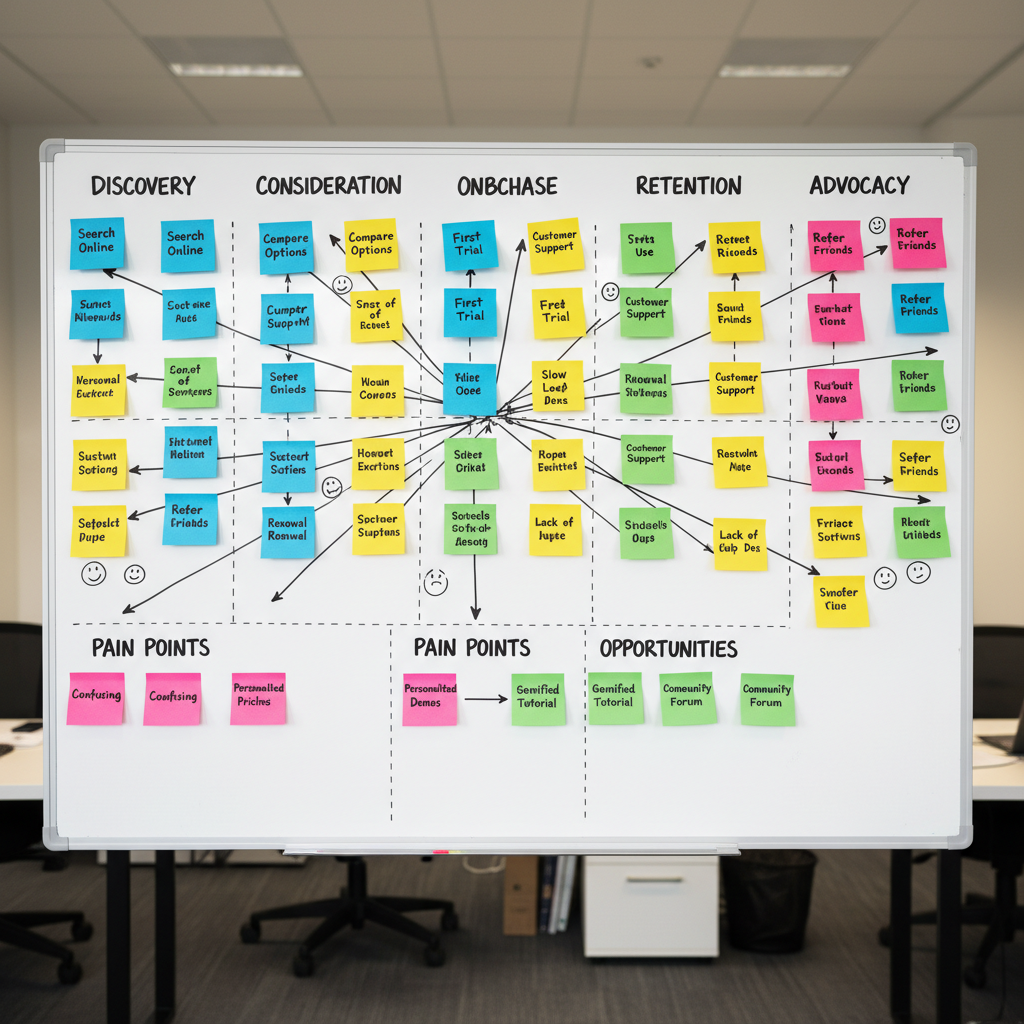
To truly master the customer expectations small business owners face, you must examine your operation through the lens of a timeline. This is where customer journey mapping becomes an essential diagnostic tool. A journey map is a visual representation of every interaction a person has with your brand, starting from the moment they discover you on a local Middletown social media page to the final point of post purchase support. You do not need enterprise level software to execute this effectively. A large whiteboard and a stack of sticky notes are sufficient to plot out your current touchpoints.
By laying these steps out physically, you can identify friction points where your service might lag. Perhaps the transition from booking an appointment to receiving a confirmation is where communication drops, or the delivery process lacks the personal touch you promised. Visualizing these gaps allows you to develop actionable strategies for growth that target specific failures rather than guessing at broad improvements. While a DIY map is a strong starting point, a professional customer experience consulting audit can uncover the silent expectations you might be overlooking. GroundFloor Development Group helps you refine these maps to ensure every touchpoint reinforces your brand presence.