

Businesses can win back unhappy customers who don't complain by proactively identifying churn signals and initiating direct outreach through targeted feedback surveys. Small business owners should prioritize regular engagement to address silent dissatisfaction before it results in a lost relationship, ensuring that every client feels valued regardless of their vocalization.
Every business owner fears the scathing one-star review, yet the real threat to your bottom line is the customer who says nothing at all. You notice retention rates dip or a regular client suddenly vanishes, leaving you to guess where the friction occurred. This silent churn is a quiet killer for small businesses because it robs you of the chance to salvage the relationship. When a customer leaves without a word, they take their lifetime value and their referrals with them; they often share their dissatisfaction with their network instead of your team. In this guide, we will explore the psychology behind customer silence and identify the red flags that signal a client is halfway out the door. You will learn practical strategies to surface hidden friction points and leverage the service recovery paradox to turn quiet dissatisfaction into long-term loyalty.
The Danger of the Silent Majority in Small Business
Most small business owners in Middletown assume that if the phone isn't ringing with complaints, operations are running smoothly. However, research indicates that 96 percent of unhappy customers do not complain directly to the business. For every vocal customer who tells you their order was wrong or the service was slow, there are dozens more who simply walk out the door and never return. While no news feels like good news, silence is frequently the first indicator of churn.
It is important to differentiate between vocal complainers and silent leavers. A vocal complainer is actually providing a valuable service; they are giving you a roadmap to fix a specific friction point and retain their business. A silent leaver, conversely, disappears without offering you the opportunity to make things right. They take their revenue and their potential referrals with them, often sharing their negative experiences with others in the Miami Valley instead of with you.
At GFDG, we view this silent churn not as a random occurrence, but as a structural service gap. Identifying service gaps is the first step in protecting your bottom line. We believe that these departures can be prevented through comprehensive customer experience consulting and precise customer journey mapping. By analyzing every touchpoint, businesses can uncover the hidden moments where customers feel neglected or frustrated, allowing for a proactive strategy that keeps them coming back.
Why Do Unhappy Customers Stay Silent?
Understanding the psychology of silence is essential for any business owner looking to improve retention. At its core, a silent customer is an individual who has encountered a friction point but decides that the effort required to voice a grievance outweighs the potential benefit of a resolution. Research into consumer behavior suggests three primary drivers for this behavior: the perception that complaining is too much work, a lack of belief that the business will actually implement change, and a fundamental desire to avoid confrontation.
In Middletown and the surrounding Miami Valley, this silence is often amplified by a cultural trait we call "Ohio nice." Our community values politeness and social harmony, which often leads customers to prioritize avoiding a scene over receiving a correction. When a server or shop owner asks how things are going, a dissatisfied customer is likely to smile and say everything is fine, only to decide privately that they will never return. They choose the path of least resistance, which is simply to stop showing up.
This lack of feedback is significantly more damaging than a one star review. While a negative review is public and painful, it serves as a clear signal for identifying service gaps. It provides a specific problem to solve. Silence, however, offers no data. It leaves you operating in a vacuum, unaware that your brand promise is being eroded. Dealing with unhappy customers who don't complain requires moving past reactive management and into comprehensive customer experience consulting. By recognizing that silence is a choice driven by friction, you can begin to build a framework that makes feedback feel safe and effortless.
Red Flags: How to Spot a Silent Customer Before They Leave

Detecting unhappy customers who don't complain requires a transition from reactive management to active observation. Rather than waiting for a noticeable drop in monthly revenue, successful entrepreneurs watch for micro-shifts in behavior. These subtle changes often occur weeks or months before a customer officially churns. They are the early warning signs that the customer journey is beginning to fray.
In a physical storefront or service business in Middletown, these red flags manifest as a withdrawal of social capital. You should monitor for these specific behavioral transitions:
The Engagement Gap: A regular who previously engaged in small talk with your staff suddenly becomes strictly transactional. They no longer share updates about their day or ask about the business; they simply pay and leave.
The Linger Factor: A client who used to browse your aisles or sit in your cafe now opts exclusively for "to go" orders or arrives exactly at their appointment time and departs immediately after completion.
The Frequency Dip: A shift from weekly visits to bi-weekly, then monthly. This indicates they are actively testing a competitor or finding reasons not to visit your location.
Digital signals are equally revealing for local brands. If a long-time customer stops opening your newsletters or ceases engaging with your social media posts, they are mentally unsubscribing from your brand identity. These micro-signals suggest that your value proposition is no longer resonating or that a recent friction point has soured the relationship.
Identifying these cues is a core part of identifying service gaps before they become permanent losses. At GFDG, our comprehensive customer experience consulting focuses on these early warning signs. We train teams to read the room and recognize when a customer’s body language or purchasing rhythm changes. By catching these shifts early, you can intervene while the customer is still in your building, rather than trying to win them back once they have already moved on.
The High Cost of Silent Churn for Middletown Entrepreneurs
The cost of losing a customer is never just the loss of a single transaction; it is the erosion of future predictable revenue. For Middletown entrepreneurs, silent churn creates a leaky bucket effect. You may invest heavily in local marketing or social media ads to drive new foot traffic, but if those new leads fall through the same service gaps that drove away your regulars, your growth remains stagnant. It is statistically much more expensive to acquire a new client than to retain one who has already crossed your threshold.
When you lose unhappy customers who don't complain, you lose the data necessary to fix your business. Without knowing why they left, you are likely to repeat the same mistakes with the next ten people who walk through the door. In the Miami Valley, the stakes are compounded by our interconnected social circles. A silent leaver might not confront you directly, but they will likely mention their disappointment at a local park, a school function, or on a neighborhood forum. This invisible negative word of mouth creates a reputation barrier that marketing cannot easily overcome. At GFDG, we focus on identifying service gaps to ensure your bucket is sealed. Through comprehensive customer experience consulting, we help you protect the revenue you have already worked so hard to earn.
How to Find Out What Your Customers Really Want Without Using Boring Surveys
To stop losing unhappy customers who don't complain, you must move beyond the automated Net Promoter Score (NPS) email. These generic requests often feel like an additional chore, and for a customer already experiencing friction, they are usually ignored. Finding out what customers really want requires active engagement at the point of experience rather than a retrospective digital form.
Start by replacing the reflexive "How was everything?" with pointed questions at the point of sale. When staff ask specific questions like, "What is one thing we could have done to make your visit easier?" or "Did you find everything you were looking for today?", they invite a more honest response. If a customer is leaving earlier than expected or seems rushed, the research suggests that staff should check in immediately. Staying calm and offering your direct contact details if a minor issue is mentioned can turn a silent departure into a constructive dialogue.
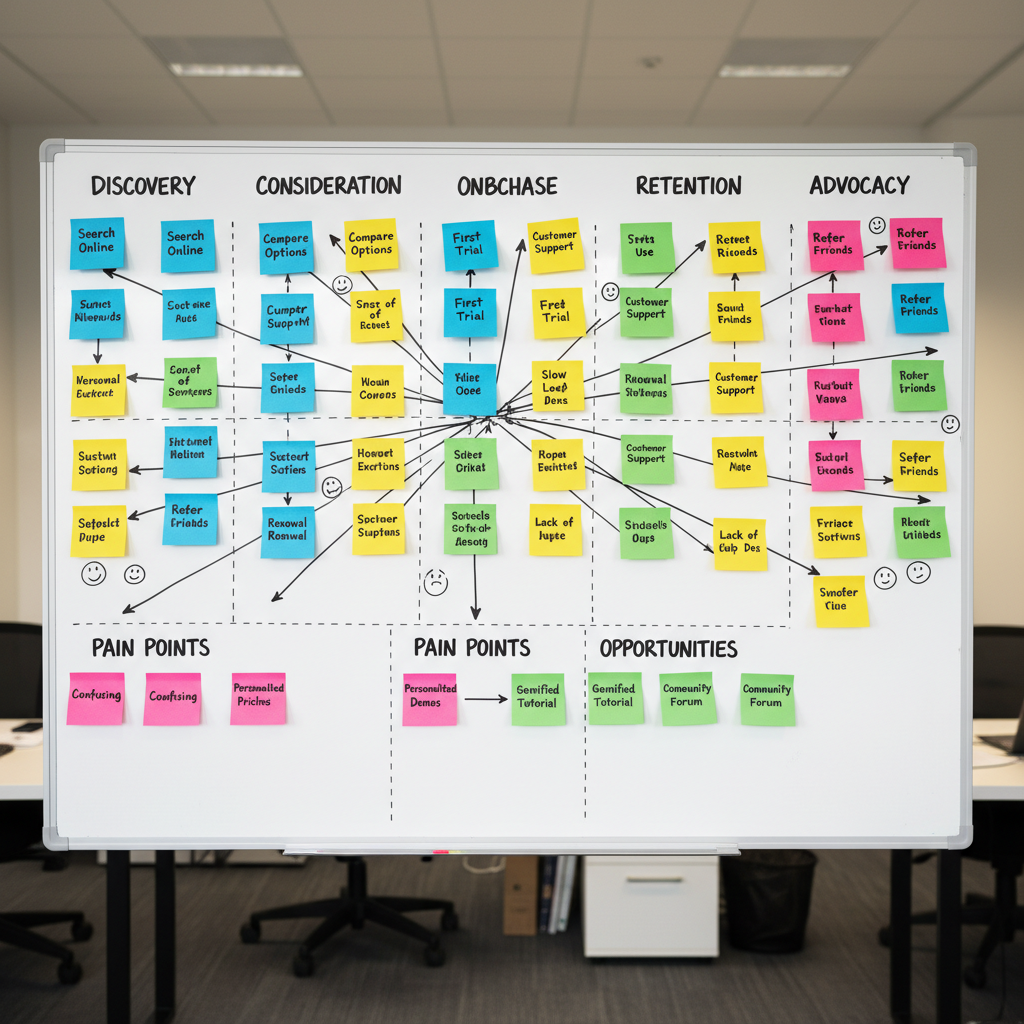
A secondary strategy involves identifying service gaps through formal service audits. This involves having an objective outside observer walk through your business to spot where the process feels heavy or frustrating. At GFDG, we combine these audits with detailed customer journey mapping. This process visualizes every interaction a client has with your Middletown brand, allowing us to perform a gap analysis that pinpoints exactly where your intended experience differs from the actual customer reality. Through comprehensive customer experience consulting, we transform these hidden pain points into actionable strategies, ensuring that you are no longer guessing what your customers need to stay loyal.
The Service Recovery Paradox: Turning Silence into Loyalty

The Service Recovery Paradox is a powerful psychological phenomenon: a customer who experiences a service failure and sees it resolved brilliantly often becomes more loyal than if the transaction had been flawless from the start. This is why identifying service gaps is not just about fixing errors; it is about creating opportunities for extreme loyalty. When you successfully engage unhappy customers who don't complain, you flip the script from a silent departure to a vocal partnership.
To activate this paradox, you must be proactive. Start by identifying customers whose visit frequency has dropped and send a personal, handwritten note or a direct email from the owner. Avoid generic coupons that look like mass marketing. Instead, offer an authentic incentive, such as a complimentary upgrade on their next visit or a credit specifically for a service they have enjoyed in the past. This makes the outreach feel like a relationship, not a sales pitch.
During this outreach, ask for their honest opinion on one specific aspect of their last visit, such as the wait time or the clarity of your pricing. Narrowing the scope makes it easier for the customer to answer. When they do respond, your reaction is critical. Remain calm, listen without interruption, and never blame the customer for their perception. If they mention a friction point you were unaware of, acknowledge it immediately and provide your direct contact details to show accountability. Through comprehensive customer experience consulting, we have seen that when a business owner takes personal responsibility for a fix, the customer often feels an increased sense of belonging to the brand, turning a potential loss into a long term advocate.
Practical Strategies for Small Business Owners in the Miami Valley
Implementing these strategies allows Middletown business owners to shift from reactive management to proactive growth. To protect your revenue, start with these three concrete steps today.
Audit Your Lapsed Regulars: Identify your top ten high value customers who have not visited in the last 60 days. A personal, non-automated message can often bridge the gap before their silence becomes permanent.
Execute a First-Time Walkthrough: Enter your storefront as if you have never been there before. Evaluate the physical environment, signage, and the speed of the initial greeting. This exercise is essential for identifying service gaps.
Train for Non-Verbal Cues: Instruct your team to read the room by watching for signs of frustration, such as constant watch checking or avoided eye contact. Catching these signals allows staff to offer immediate solutions to unhappy customers who don't complain before they leave.
For more tailored support, comprehensive customer experience consulting can help you build a resilient local brand. You can learn more about GFDG and our specific approach to small business growth in the Miami Valley.
Winning back silent customers requires a proactive approach and a genuine desire to improve. By reaching out and listening before they leave for good, you can transform hidden dissatisfaction into long-term loyalty. While these strategies are effective, implementing them consistently across your business takes time and precision. If you want expert help building stronger customer relationships, you can learn more about our approach to small business development. At GFDG, we specialize in creating systems that keep your clients happy and engaged.