

Small businesses build customer loyalty and trust for small business by prioritizing personalized service and authentic communication over simple points-based programs. Success relies on recognizing individual customer preferences, providing consistent value, and treating every interaction as an opportunity to foster a genuine relationship.
Small business owners often feel trapped in a cycle of constant lead generation, watching hard earned customers vanish after a single transaction. It is a common frustration to believe that without a high tech rewards app or deep discounts, you cannot compete for long term loyalty. However, true retention is built on a foundation of trust rather than transactional bribery. For the boutique firm or local shop, this creates a unique competitive advantage that larger corporations simply cannot replicate. In this guide, we will examine how to transition from fleeting satisfaction to genuine brand advocacy. You will learn to apply the Three Rs and Four Cs of sustainable trust, leverage your position as a solo or small owner, and identify the hidden service gaps that quietly kill customer relationships. We are moving beyond the punch card to build a business that scales through reputation.
Why Transactions Aren't Relationships: The Real Meaning of Customer Loyalty

Many small business owners in Middletown mistakenly believe that building customer loyalty requires a complex digital app or a punch card system. This perspective views loyalty as a series of transactions triggered by discounts or rewards points. While a coupon might bring a person through the door once, it does not guarantee they will return when the promotion ends. This is the core difference between transactional loyalty, which is based on price, and emotional loyalty, which is built on a foundation of trust.
For a solo entrepreneur, true customer loyalty and trust for small business is not a software feature; it is a foundational brand asset. It represents the psychological commitment a customer makes to your business because they feel seen, heard, and valued. Large retailers use algorithms to mimic this connection, but local owners have a distinct advantage: the human element. You are not a faceless corporation; you are a neighbor. When you focus on identifying service gaps in the customer journey, you can create actionable strategies for growth that rely on interpersonal rapport rather than a database.
At GroundFloor Development Group, we view loyalty as the byproduct of consistently meeting expectations. Trust is earned when the experience you promise matches the experience you deliver. When a customer trusts you, they are less sensitive to price changes and more likely to advocate for your brand. This level of connection transforms a one-time buyer into a long-term partner, creating a sustainable revenue stream that no discount code can replicate. Investing in customer experience consulting allows you to move beyond the transaction and start building the relationships that define successful local brands.
The Three Rs and Four Cs of Sustainable Customer Trust
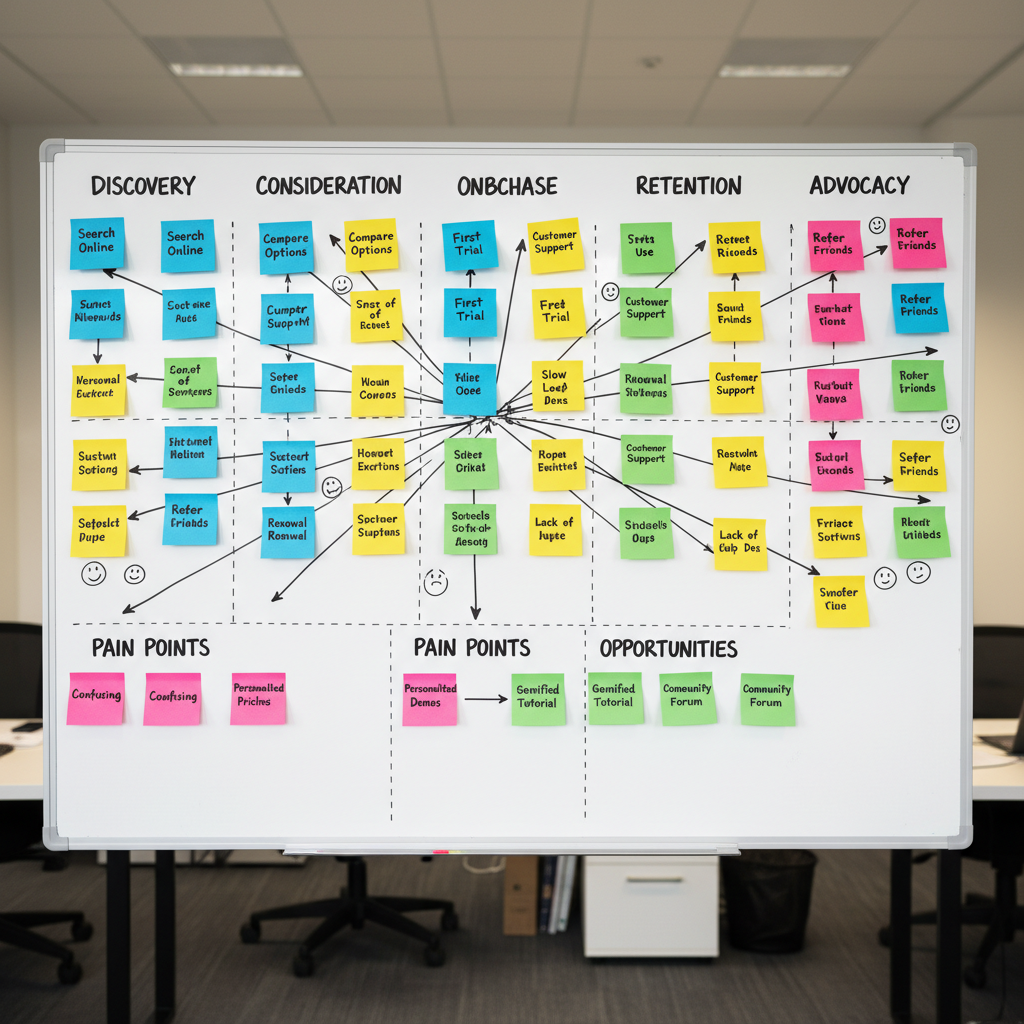
Building sustainable customer loyalty and trust for small business requires moving from haphazard interactions to a deliberate framework. This is best achieved through the Three Rs of business growth: Retention, Relationship, and Referral. Retention is the act of keeping a customer engaged over time, which is significantly more cost effective than acquiring new ones. Relationship focuses on the emotional bond formed when a customer feels understood and valued. Referral is the ultimate byproduct of trust, where satisfied clients become your unofficial sales force within the Middletown community.
To sustain these Three Rs, solo owners must master the Four Cs of customer experience: Context, Convenience, Connectivity, and Continuity. Unlike large corporations that rely on complex data sets, a local entrepreneur can apply these manually through high touch service.
Context: Recognizing where the customer is in their journey and understanding their specific history with your brand during every interaction.
Convenience: Reducing friction in the buying process, such as offering flexible scheduling or simplified, transparent billing.
Connectivity: Maintaining a human link through personal follow ups, a simple check-in call, or active community involvement.
Continuity: Delivering the same quality and personal presence every single time a client visits.
Continuity is especially vital for solo owners. It means your brand promise is not a moving target. In a small business context, continuity means the customer sees the same familiar face and receives the same high caliber service every time they walk through your door. This reliability eliminates the psychological risk a customer feels when spending money. By identifying service gaps in how you deliver these pillars, you create actionable strategies for growth that do not require a digital portal. This structured approach to customer experience consulting ensures that your business remains resilient by turning every interaction into a building block for long term trust.
The Solo Owner Advantage: Why Customers Stay Loyal to Small Local Businesses
The reliability of a consistent presence serves as a powerful differentiator against national competitors. In the Miami Valley, local intent is driven by a desire for genuine connection rather than just a product exchange. When a resident in Middletown chooses a local service provider, they are often making a psychological investment in their own community. This "knowing your neighbor" dynamic creates a level of accountability that no corporate algorithm can replicate. A large retailer might track your purchase history to send a automated coupon, but a solo owner remembers your name, your preferences, and the specific challenges you are trying to solve.
Building a brand that feels like a community fixture starts with leveraging your personal story. People do not just buy what you do; they buy why you do it in this specific city. By being a visible, familiar face at local events or within your shop, you naturally lower the barrier to trust. This human presence acts as a living guarantee of quality. If something goes wrong, the customer knows exactly who to talk to, which removes the fear of being trapped in an impersonal corporate phone tree.
Focusing on identifying service gaps in how you project your brand locally allows you to refine this advantage. When your personal values align with your business operations, you create actionable strategies for growth that resonate on an emotional level. This organic approach to customer loyalty and trust for small business turns your size into your greatest strength, ensuring that your clients return not for the points, but for the person. Moving beyond the facade of corporate professionalism allows you to lean into the authenticity that only a local entrepreneur can provide.
Five Actionable Strategies to Build Trust Without a Rewards App
Leveraging the human element requires more than just being friendly; it requires a systematic approach to integrity. Moving from being a familiar face to a trusted partner involves shifting your focus toward behaviors that prove reliability. These five tactics provide a framework for building customer loyalty and trust for small business without the need for digital tracking or points systems.
Radical Transparency: Small business owners often fear that admitting a mistake or a delay will drive customers away. In reality, being upfront about lead times or errors builds immense credibility. If a supply chain issue delays a project in Middletown, call the client before they have to call you. Honesty during a minor crisis is the fastest way to prove that you value the person over the paycheck.
Personalized Follow-ups: Automation can send a generic thank you email, but it cannot replicate the impact of a handwritten note or a brief check-in call one week after a service is completed. Reference a specific detail from your previous conversation to show you were listening. This level of customer experience consulting at the micro-level reminds the client that they are not just a number in a database.
Consistency Across Touchpoints: Trust is eroded by friction. If your brand voice on social media is energetic and helpful, but your in-person greeting is perfunctory, the customer feels a sense of cognitive dissonance. Use brand fundamentals to ensure every touchpoint, from the initial quote delivery to the final invoice, feels like it came from the same professional entity. This alignment is one of the most effective actionable strategies for growth for solo owners.
Active Listening: Create a visible feedback loop. When a customer offers a suggestion, acknowledge it and, if applicable, show them the change you made based on their input. Seeing their influence on your business operations creates a sense of shared ownership and deepens their commitment to your success.
Service Recovery: Anticipate the need to make it right before the customer asks. If you notice a detail was missed, offer a solution or a credit immediately. Proactive service recovery often results in higher long term satisfaction than a flawless transaction because it demonstrates your character under pressure. By identifying service gaps in your recovery process, you ensure that a single mistake does not become a permanent exit.
Identifying Service Gaps: How Audits Reveal Trust Killers

While the five strategies provide a framework for excellence, many entrepreneurs struggle to see where their own systems fail. True customer loyalty and trust for small business is often compromised not by major failures, but by subtle friction points known as service gaps. These gaps occur when the customer’s actual experience deviates from your brand promise. Because you are deeply involved in daily operations, these inconsistencies often become invisible to you.
GFDG helps Middletown owners by identifying service gaps through comprehensive CX audits. These audits focus on micro-moments, which are brief interactions where a client subconsciously decides if you are reliable. For instance, consider how a phone is answered when you are busy, or the visual professionality of a quote delivered via email. If a quote is delayed by forty-eight hours without a status update, the customer feels a sudden drop in confidence. These are trust killers that erode the relationship before it can fully form.
Seeing your business from the outside in is essential for long term retention. By conducting a systematic review of the entire journey, you can develop actionable strategies for growth that address these specific pain points. Our customer experience consulting process involves mapping every touchpoint to ensure that no part of the process feels disjointed or neglected. When you eliminate these hidden sources of frustration, you clear the path for a seamless experience that naturally fosters emotional loyalty.
Moving from Satisfaction to Brand Advocacy
Satisfaction is merely the baseline; it indicates that a business met the minimum expectations. Loyalty, however, is a proactive choice made by a customer who believes in your mission. Moving from a satisfied buyer to a brand advocate requires a shift toward experience design. This involves looking beyond product delivery to curate every emotional touchpoint. By identifying service gaps in these moments, you create a seamless journey that encourages referrals within the Middletown community.
True customer loyalty and trust for small business is built through these intentional interactions. Trust serves as the primary currency for the modern entrepreneur. When you implement actionable strategies for growth through specialized customer experience consulting, you transform your service into a relationship. Advocacy is the ultimate result of a business that values the person as much as the project.
True customer loyalty stems from authentic trust and consistent value, moving far beyond the mechanics of a traditional rewards program. By prioritizing genuine relationships, your small business can create a lasting community of dedicated supporters. If you want expert help implementing these strategies or finding new ways to scale your impact, we are ready to guide you. You can learn more about our philosophy and how GFDG supports business growth by visiting our team page. Let's build something meaningful together.